


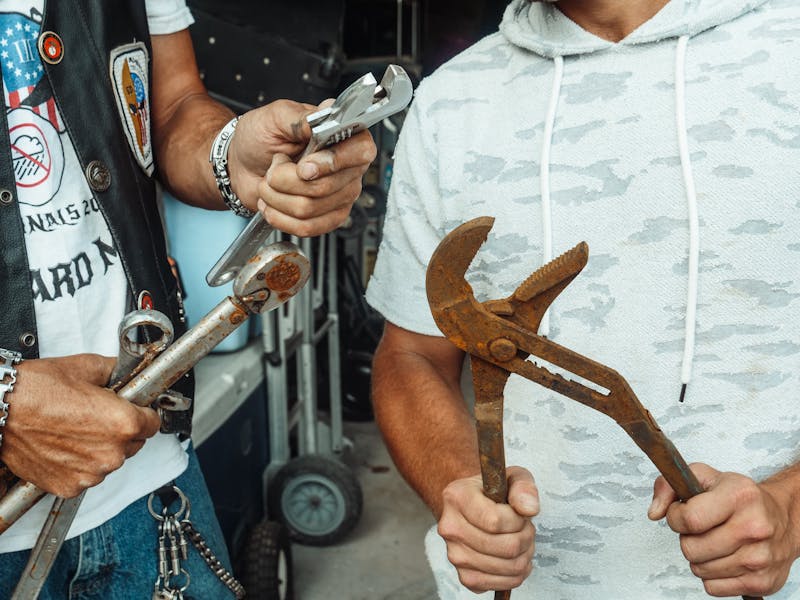
A wise person once told me that vinegar can bring rusty garden tools back to life. Curious, I looked into it—and it turns out, they were absolutely right! Using white distilled vinegar is not only effective but also an eco-friendly way to remove rust.
The secret lies in acetic acid, which reacts with rust , breaking it down and making it much easier to scrub off—revealing clean, usable metal underneath.
What You’ll Need:
- White vinegar (enough to fully submerge the rusted parts)
- A plastic or glass container
- Steel wool or a wire brush
- A clean cloth or rag
- Baking soda (optional)
- Oil or WD-40 (for post-cleaning protection)
Step-by-Step Guide:
- Soak the Tools
Place the rusted metal parts of your tools in a container filled with white vinegar. Avoid soaking any wooden or plastic handles. Let them sit for 6 to 24 hours, depending on how rusty they are.
Don’t leave tools in vinegar too long—prolonged exposure may start to corrode the good metal.
- Scrub Off the Rust
After soaking, use steel wool, a scouring pad, or a wire brush to scrub away the rust. It should come off easily now. - Neutralize with Baking Soda (Optional)
To stop the vinegar’s acid from continuing to act, you can briefly dip the tools in a mix of baking soda and water, then rinse well. - Dry Thoroughly
Use a clean cloth to dry the tools completely. Any remaining moisture can cause rust to return. - Apply Protective Oil
Lightly coat the cleaned metal with oil or WD-40 to help prevent future rust and keep your tools in top shape.Call to action: See our Tool sharpening services
💬 Share Your Thoughts